

Our Services
Our office is proud to offer the following services to our patients:
Dry Eye Management
Are your eyes red, itchy, scratchy, and watery? You could have dry eyes. This condition affects some people seasonally and others chronically.
If you have dry eyes that can’t be controlled with over-the-counter medications, you may need dry eye treatment. We offer treatment for dry eyes. We’ll assess your condition to determine its cause and help you remedy the problem.
What Is Dry Eye?
Dry eye is a condition that either prevents your eyes from making enough tears, or causes your tears to evaporate too quickly. This causes discomfort and can affect your eye health as well as appearance.
What Causes Dry Eye?
Dry eye can be caused by a variety of factors. For people who experience dry eye seasonally, allergens or dry air can be the cause. For others, dry eye occurs because of the medications they’re taking, age, medical conditions they have or other factors.
Symptoms of Dry Eye
Symptoms of dry eye include:
- Stinging, scratchy, itchy eyes
- Eye redness
- Sensitivity to light
- Blurry vision
Some people who have dry eyes also experience watery eyes as their eyes try to overcompensate for the lack of moisture in the eyes.
Comprehensive Eye Exams
Maintaining your visual health is all about being proactive, which means comprehensive vision exams are critical. These regular visits to the eye doctor can help keep you seeing clearly, monitor your eyes for concerning changes, and more.
Visual Acuity Test
Using the Snellen chart, the eye doctor will determine how accurately you can read letters of different sizes. Each eye will be tested independently and together.
Visual Field Test
Visual field tests assess how well you can use your peripheral (side) and central vision. You will be shown a chart with a target to focus on while the doctor asks questions.
Refraction
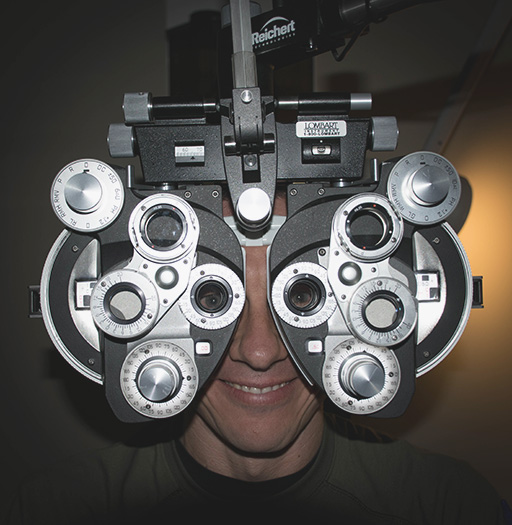
Using a phoropter, the eye doctor will use a series of lenses to determine which corrective lenses help you see clearly. This is only done if you already wear corrective lenses or refractive errors are suspected.
Dilated Eye Exam
The eye doctor will add drops to your eyes that open up the pupils, which will allow them to look at parts of the eye like the retina and optic nerve. The slit lamp allows the eye doctor to get a closer look at the internal structures of the eye by focusing a thin slit of light into certain areas.
Tonometry
Tonometry tests are used to measure the level of intraocular pressure within the eye. This is an important test to detect glaucoma and other eye health conditions.
Myopia Management
Myopia management is a proactive clinical approach designed to slow down the progression of nearsightedness in children and teenagers. Traditionally, standard eyeglasses or contact lenses only corrected blurred distance vision without addressing the underlying worsening of the condition.
Today, eye care professionals focus on slowing optical elongation, which is the abnormal lengthening of the eyeball from front to back. This structural lengthening is the primary cause of progressive myopia.
Managing this condition early is critical because high myopia significantly increases the risk of serious, sight-threatening ocular complications later in life.
Myopia Treatments
- Orthokeratology (Ortho-K): Hard contact lenses worn overnight that temporarily reshape the cornea.
- Soft Multifocal Lenses: Daily-wear contacts designed with specific optical zones to slow eye growth.
- Peripheral Defocus Glasses: Specialized spectacle lenses that correct central vision while creating a specific blur on the side retina.
- Low-Dose Atropine Drops: Daily medicated eye drops that chemically signal the eye to slow its elongation.Lifestyle modifications also play a supportive role in treatment efficacy. Increased outdoor time, ideally 90 to 120 minutes daily, provides natural sunlight that triggers dopamine release, which naturally inhibits eye growth.
Eyeglasses
Eyeglasses are available to help people with many types of vision problems, including nearsightedness (myopia), farsightedness (hyperopia), and issues with central vision. The lenses are the part of the glasses that determine what problem is targeted.
Primary Lens Types
- Single Vision Lenses – Most often used for general myopia and hyperopia, but target only one or the other
- Bifocal Lenses – Two lenses in one to correct both myopia and hyperopia
- Trifocal Lenses – Three lenses in one for near, far, and middle distances
- Progressive Lenses – Like bifocals or trifocals without visible lines
- Toric and Prism Lenses – Therapeutic lenses for problems with astigmatism and heterophoria
What to Expect
When you have issues with your vision, the eye doctor will perform a comprehensive vision assessment that can include a number of different tests. The doctor will be looking at refractive errors, which are issues that affect how your eye focuses on light. However, they will also assess other things, such as how the eyes team together or focus when exposed to light. From here, the doctor will use various lenses in a phoropter to determine what prescription you need for glasses that help you see clearer.
Contact Lenses
Considering contact lenses? An optometrist can help you determine if contacts are the right optical solution for you.
Who Is a Good Candidate for Contact Lenses?
Most patients are good candidates for contact lenses as long as they need to wear glasses all day in order to see clearly. Patients that only need eyeglasses sometimes will likely find contact lenses to not be worth their time.
In some cases, patients are not good candidates for contacts because of eye health concerns, such as problems with the corona or consistent issues with dry eyes.
Getting Contact Lenses: What to Expect During Your Visit
Getting contact lenses looks a lot like getting eyeglasses with a few added steps in the process. The general process includes:
- Undergoing a standard eye exam
- Discussing contact lenses types and preferences
- Taking measurements of the eye surface
- Evaluating the quality of tear film
- Fitting the contact lenses and learning how to use them
Pediatric Eye Exams
Pediatric eye care is a vital component of a child’s overall health, focusing on the prevention, detection, and treatment of vision problems during key developmental years. Unlike adults, children may not be able to articulate their vision issues, making regular, comprehensive eye exams essential for catching conditions that could otherwise lead to long-term problems. Early detection is key, as conditions like amblyopia (lazy eye) and strabismus (crossed eyes) are most effectively treated when caught in childhood, before age seven.
Infancy to Adolescence
From infancy through adolescence, a child’s eyes undergo rapid changes. The American Optometric Association recommends a child’s first comprehensive eye exam at 6–12 months of age, another at 3 years, and again before first grade, with annual exams thereafter for school-aged children. These exams go beyond a simple vision screening, checking for visual acuity, eye alignment, focus, and depth perception. This is especially crucial for academic success, as up to 80% of classroom learning is visual. Undiagnosed vision problems can cause poor performance, difficulty concentrating, and may be mistaken for learning disabilities.
In addition to regular check-ups, parents can support their child’s eye health by encouraging outdoor play, which can help reduce the progression of myopia (nearsightedness). It’s also important to manage screen time, use proper lighting, and ensure a diet rich in eye-healthy nutrients.
Emergency Eye Care
Sometimes, protecting your vision will mean taking immediate action and seeking emergency eye care. Eye health emergencies can involve a number of symptoms, but getting help as soon as possible can mean the difference in retaining your vision or avoiding permanent damage.
What’s Considered an Eye Health Emergency?
A number of situations should drive you to seek care for your eyes as quickly as possible.
Object in the Eye
Foreign objects in the eye are one of the most common types of eye emergencies. This means you have a piece of debris or an object that has embedded itself into the cornea. Avoid trying to remove an embedded object on your own because doing so could lead to further problems. Avoid touching your eye and get to an eye doctor as quickly as possible for assistance.
Chemical Exposure or Burns
Chemical exposure happens when you get some type of chemical in your eye. This could occur with anything from industrial chemicals to cleaning products or aerosol sprays you use at home. Chemicals can burn your eyes and cause permanent damage, so washing the eye with clean water or at an eye wash station immediately is critical. Once you have flushed the eye, get to an emergency eye doctor as quickly as you can.
Sudden Changes in Vision
A sudden change in your visual abilities should always be treated as an emergency situation. With or without an obvious cause, a drastic difference in how well you can see can be a sign that something serious is going on with either your eyes or your body.
Trauma to the Eye or Eyelid
Trauma to the eye or eyelid may include cuts and abrasions, scratches, puncture wounds, and even blunt force to the area, as with a black eye. Any time the eye itself has been scratched or injured, it is best to visit an emergency eye doctor for an evaluation. However, eyelid trauma can also be an emergency situation, especially if the lacerations are bleeding excessively or there is extensive swelling.
Pre-Operative Care
Maximizing the success of your eye surgery begins well before you enter the operating room. Your eye doctor will first conduct a comprehensive evaluation to map your eye anatomy and measure your vision. You must disclose all current medications, especially blood thinners, which might require temporary adjustment.
If you are undergoing laser vision correction or cataract surgery, your doctor will provide strict guidelines on contact lens use. You must stop wearing contact lenses days or weeks before your evaluation, as they temporarily alter the natural shape of your cornea.
Pre-operative care also includes a strict regimen of prescribed eye drops. These typically include antibiotic drops to minimize infection risks and anti-inflammatory drops to reduce tissue swelling. On the night before your procedure, you should thoroughly clean your face to remove all makeup, lotions, and debris from the eye area. Finally, arrange for a designated driver to take you home, as your vision will be blurred and your reflexes slowed immediately following surgery.
Post-Operative Care: Protecting Your Vision
Recovery requires strict adherence to your eye doctor’s instructions to prevent complications like infection or structural damage. You must apply prescribed eye drops exactly as scheduled. Never skip a dose, and ensure the dropper tip never touches your eye or any other surface.
Protecting the physical integrity of the healing eye is critical. You must wear a protective shield while sleeping to prevent accidental rubbing or pressure. Avoid getting water, soap, or shampoo directly in your eyes during showers for at least the first week.
Your doctor will restrict heavy lifting, vigorous exercise, and bending at the waist. These activities increase intraocular pressure, which can disrupt delicate surgical incisions or corneal flaps. Attend all scheduled follow-up appointments so your doctor can monitor healing, check eye pressure, and catch any rare complications early. Contact your clinic immediately if you experience severe pain, sudden vision loss, or flashes of light.
Cataracts and Glaucoma
Cataracts and glaucoma are two of the leading causes of vision loss worldwide, but they affect the eyes in fundamentally different ways.
The Conditions
- Cataracts occur when the eye’s natural lens becomes cloudy due to protein buildup. This gradual clouding blocks light, causing blurry vision, faded colors, and severe glare, particularly at night.
- Glaucoma is a chronic disease that damages the optic nerve, often driven by an accumulation of fluid that increases internal eye pressure (intraocular pressure). Known as the “silent thief of sight,” it painlessly destroys peripheral vision first and can cause permanent blindness if left untreated.
Treatment Options
An eye doctor—typically an ophthalmologist—can effectively manage both conditions through targeted medical and surgical interventions.
- Treating Cataracts: The treatment for cataracts is highly straightforward and successful. An eye surgeon performs cataract surgery, removing the cloudy lens and replacing it with a clear, artificial intraocular lens (IOL). This brief, outpatient procedure can fully restore lost vision.
- Treating Glaucoma: Because glaucoma damage cannot be reversed, treatments focus entirely on lowering eye pressure to halt further progression. First-line defenses include prescription eye drops or oral medications to decrease fluid production or improve drainage. If drops are insufficient, doctors utilize laser therapies (like Selective Laser Trabeculoplasty) or complex surgeries (like trabeculectomy or shunt implants) to create new drainage pathways.
- Combined Approaches: For patients facing both diagnoses, modern eye care allows doctors to perform Minimally Invasive Glaucoma Surgery (MIGS) through the same tiny incision used during cataract surgery. This combined procedure restores clarity while safely stabilizing eye pressure.


